
 I’m not sure if you guys have heard this band yet, the Arcade Fire? They’re Canadian, and kind of popular. They’ve got this new album, Neon Bible, and more media coverage than Anna Nicole Smith (well, maybe not), and Sam forced me to go see them live a few years ago and they were really, really good. It was a small venue, and we all sang the words to the songs even though we maybe had never heard them before. Anyway, here’s the opening track off that new record. Hope you like it… I like the second song better.
Black Mirror [MP3, 3.8MB, 128kbps]
Sam’s original post: 08/02/04
Apologies for the atrocious bitrates, young audiophiles, but this was enough to sell me, so I thought I’d share… Actually, what first sold me on The Arcade Fire was the B-side off their new 7-inch, which is in fact a 1940s recording of the lead singer’s grandfather (pedal steel legend Alvino Rey) and his orchestra. These downloads, however, are genuine Arcade Fire material, combining The Flaming Lips’ theatric pop, Joy Division’s driving rhythms, Bjork’s blissful euphoria, and a million other influences into something at once exuberant and wistful. So pump up the preamp and enjoy.
 Kinetic Stereokids hail from Flint, Michigan (third most dangerous city in the U.S. and one of the most depressing), where I reckon they hear a lot of car alarms. But you know what they say…when life gives you car alarms, make samples. And why stop with car alarms? KSK’s debut Basement Kids is an enticing grab bag of found sounds and samples, as well as free-range rap, folk and rock guitar, drowsy ballads, garage beats, cuttin’ and scratchin’, experimental knob noodling, and other random bits. Beck employed similar means to reach a different end on records like Mellow Gold and Odelay. Here there is a melancholy, desperate, and spiteful undercurrent which makes even the rough edges compelling to listen to. It won’t necessarily get the party started but makes an excellent public transportation soundtrack.
 Maher Shalal Hash Baz primarily consists of Tori Kudo, a Japanese composer/musician who has been making somber dissonance for nearly two decades now. The name comes from the Book of Isaiah and roughly translates from Hebrew as “To speed to the spoil, he hasteneth the prey.†As lesser preached Bible passages go, it ranks up there for me with “It is easier for a camel to pass through the eye of a needle than for a rich man to enter the kingdom of God.†But I digress… Kudo doesn’t just make messy music—he appears to these ears to be a true inventor of improvisational balladry. “Different Daylight†sounds at first like an early rehearsal in which the instruments are all being played by Kudo at the same time. But at the center of that clash of horns, strings, guitar and other odd noises is the steady, knowing voice of Kudo himself, like a tour guide through a sandstorm. He has said of his own music, “Error in performance dominates MSHB cassette, which is like our imperfect life.” Yes, but if you listen to
  Clay’s posting of this
  My six year old says she doesn’t like this music “because it’s scary.” She finds the ticking clock sound disconcerting. “It sounds like someone’s gonna get me.” Hirohito Ihara, founder of Kobe-based radicalfashion, admits that he can’t escape from the subconscious influence of his surroundings. The resulting abstract compositions will seep right back into your subconscious. Unlike my daughter, I find the rhythmic found sounds soothing, and as radicalfashion intersperses his dreamy piano playing throughout the track it triggers a reassuring nostalgia. I don’t promise the same reaction for you. On his debut, Odori, Ihara lets his subconscious take the lead and stays back, out of the way, leaving the listener plenty of open space between notes to create their own meaning from his work.
 Part of the reason I’m dropping a Saturday two-fer on your ears is the overwhelming guilt of having missed the last two Saturdays. I mean, I used to be good for two posts a week and then some…take a look at me now. The other part of the reason is Ari Picker, singer/songwriter/pianist extraordinaire. His latest release as Lost in the Trees is the cinematic (in the Danny Elfman sense of the word) Time Taunts Me. It’s big and orchestral and at the same time intimate and folksy. The big and orchestral part can be attributed to the cast of fellow Berklee School of Music classical music students he convinced to breathe life into his arrangements. The intimate and folksy part is all Ari whose his whispered delivery and careful sentimentality give the whole thing a nice, soft underbelly. Big and orchestral blend with intimate and folksy to create a compelling and vaguely menacing landscape — like dark thunder clouds rolling over meticulous fields of wheat. The concept album bug seems to be spreading across everything Ari touches, when you look at where his indie pop/rock group The Never went with their latest—which leads me to
  So Rob M. suggested this one because his cousin’s roommate’s best friend’s brother is in the band, or something like that; I coudn’t keep it straight. What I do get is the ambient beats and noise laid down by Corwin Trails. Pleasant melodies, event bouncy at times, coexist among fractured and warped samples and scratches. Walls are built and crumble, time stops and starts — it all reminds me of this paper I wrote in college about how, in his poem The Waste Land, T.S. Eliot subverted the Second Law of Thermodynamics. (Sure he did!) Providers of the soundtrack to the film version of this epic battle between physics and literature: Corwin Trails.
 WJ Kington spends lots of time around his house recording found sounds, tapping on walls and household appliances and recording the results. Sometimes he just sits at the piano and records his improvisations. Rather than “perfecting” the recordings he’ll leave in sounds of passing trains and the crows scratching at his roof. What’s left are highly engaging compositions. I found these tracks via
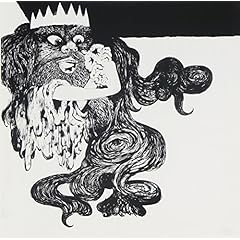
  Menomena is one of those bands who are truly making music for the sake of making music. These are not the songs that rock stars and groping groupies are made of. Unless you’re living in an alternate universe maybe. Menomena compose slightly skewed music and on their new album, Friend or Foe, it frequently sounds like a meeting of Morphine and XTC. It’s easy to get lost in Menomena’s world as you explore the album artwork, beautifully illustrated by cartoonist and graphic novelist,
  You can call me a philistine, but the term “experimental†scares me a little bit. Maybe y’all agree with me? More often than I am comfortable with “experimental†becomes some sort of catch-all term for… well, for lots of things that wouldn’t be nice to say here in this my first post of the new year. Alas, Canadian violinist Owen Pallet AKA Final Fantasy, who notably arranged the strings for Arcade Fire’s “Funeral†amongst other past musical endeavors, is unequivocally “experimenting†with his solo musical offerings and I can’t find a single unkind word for him, nor would I want to. These songs are non-linear, funny, offbeat, complex and unexpectedly beautiful. Pallet maintains all of the musicality of his classical training while successfully maintaining a lovely pop sensibility. Now don’t get me wrong, there are absolutely traces of some of the oft-loathed hallmarks of “the independent sensibility†(i.e. utilizing the word poo in the album title, naming oneself after something random like a video game, writing an album that is apparently “an eight-song cycle about the eight schools of magic in Dungeons & Dragons,†etc.) but he’s smart. Really, really smart. So Pallet gets away with all his geeky wit and irony like a bandit. All things said, I’m really shy about dropping the L-word, folks, but let me say here, loud and proud: I love this. Don’t dig it? Then just listen one more time, for me, and then decide. Okay?